
Blog
Master Data Engineering with Databricks | Online Training

Data is everywhere — and knowing how to manage it effectively can open doors to some of today’s most in‑demand careers. That’s where Data Engineering Training with Databricks comes in. Whether you’re a software engineer aiming to transition into a data role, an enterprise team struggling with siloed analytics, or a graduate ready to land your first job, the challenge is the same: finding a clear, practical path to success.
With structured training that blends real‑world projects and modern platforms like Databricks, you can gain the skills and confidence to thrive in this fast‑growing field.
Why Data Engineering Matters in Today’s World
Every day, massive amounts of information are generated — from social media posts to business transactions. For companies, that data is like gold, but without proper systems, it often goes unused.
That’s where data engineering steps in. By designing scalable pipelines and using powerful platforms like Databricks Lakehouse, data engineers unlock the full value of information. As a result, businesses can make faster and smarter decisions.
Whether you’re just starting out or leading a corporate team, investing in data engineering training isn’t just smart — it’s essential for long‑term success.
The Challenge
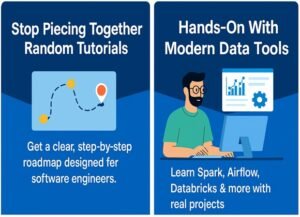
Many software engineers want to move into data engineering. However, they often feel lost. Tutorials are scattered, tools feel overwhelming, and the path forward is unclear.
The Solution
A structured, project‑based program changes everything. By focusing on tools like Databricks, Spark, and Airflow, you can build both confidence and career‑ready skills.
Practical Tips for a Smooth Transition
-
First, start with one project that mirrors real business needs, such as building an ETL pipeline.
-
Next, work on cloud platforms — Databricks is a great place to begin.
-
Finally, join online communities of data engineers to exchange tips and stay motivated.
Key Message: Your step‑by‑step path from software engineer to data engineer.
Enterprise Data Teams Seeking Scalable Analytics
The Challenge
Large organizations often struggle with fragmented data stored across different systems. As a result, analytics slow down, bottlenecks appear, and delivering insights at scale becomes difficult.
The Solution
Training your data teams in cloud‑native, scalable platforms like Databricks breaks down silos. In addition, with the right approach, teams can handle large datasets, collaborate better, and deliver impactful analytics.
Strategies That Work
-
Standardize workflows with Databricks Lakehouse to unify data and analytics.
-
Encourage cross‑training so analysts, engineers, and scientists can collaborate.
-
Build pipelines that support both real‑time and batch data processing.
Key Message: Empower your team to deliver enterprise‑scale analytics that work.
Graduate Students & Early‑Career Analysts Preparing for Data Engineering Jobs
The Challenge
Landing a first job in data engineering can feel daunting. Employers want more than classroom knowledge. In fact, they look for proof you can deliver real‑world results.
The Solution
Hands‑on, project‑driven training with certifications gives you both skills and credibility. For example, building data lakes or streaming pipelines in Databricks proves you can apply your knowledge.
Tips to Stand Out in the Job Market
-
Work on projects that mirror industry use cases (streaming data, ETL, analytics dashboards).
-
Get certified in tools widely used in the field, such as Databricks and Spark.
-
Share your projects on GitHub or LinkedIn to show employers what you can do.
Key Message: Launch your data engineering career with real projects and certification.
Why Databricks Is the Common Thread
No matter which group you belong to, Databricks plays a crucial role. Its Lakehouse platform combines the strengths of data lakes and data warehouses, making it a favorite for both learning and enterprise solutions.
-
For individuals: It’s beginner‑friendly yet powerful, letting you gain real‑world experience.
-
For teams: It enables collaboration and scalability without compromising performance.
-
For job seekers: Databricks is a keyword that makes resumes stand out with recruiters.
Therefore, by combining Data Engineering Training with Databricks, you’re not just learning theory — you’re preparing to make an immediate impact.
Final Thoughts
Data engineering is one of today’s most rewarding and future‑proof career paths. Whether you’re a software engineer ready for a change, part of an enterprise data team, or a graduate seeking your first role, the path starts with structured training and real‑world practice.
Ultimately, investing in yourself or your team today ensures you’ll be ready for the challenges of tomorrow’s data‑driven world. With platforms like Databricks at your fingertips, the opportunities are limitless.


